


 English
  Tiếng Việt
  ภาษาไทย
 Inside the Rogers–Garnacho trade: how Chelsea and Villa are gaming the rules
Posted on July 23, 2026, updated on July 23, 2026
Chelsea and Aston Villa have structured their back‑to‑back deals for Morgan Rogers and Alejandro Garnacho as much around financial rules as football needs. The two clubs are both under close scrutiny from UEFA and the Premier League, so the way they book income, costs and player movement matters almost as much as the fees themselves.
How Chelsea can afford the £117m for Rogers
Chelsea’s ability to spend big comes from a combination of heavy player sales, long contracts and a high projected revenue base.
- They sold around £300m of players last summer (a Premier League record) and have already generated more than £120m in sales this window, including Marc Cucurella, Andrey Santos, Tyrique George and others.
- Their most recent accounts showed a club‑record £262m loss at operating level and about £701m at parent‑company level, with liabilities over £1bn, but the ownership group says the model is built around third‑party loans, structured financing and an expected rise in revenue toward £700m.
- Under Premier League rules, clubs can spend up to 115% of their revenue on squad costs before hitting the “red zone” and facing tougher sanctions. Chelsea are believed to be operating near that limit, which means they must keep selling to stay compliant while still being able to sign players like Rogers.
In short, Rogers’ £117m fee is funded by a constant churn of big sales and long amortisation periods, not by a sudden surge in cash in the bank.
Why Villa took a loan with a conditional obligation for Garnacho
Aston Villa’s side of the equation is about control and accounting.
- They agreed an initial season‑long loan for Garnacho with a conditional obligation to buy that becomes permanent if certain appearance‑based triggers are met. Standard Sport understands those conditions are “easily achievable”.
- That structure lets Villa delay the full permanent cost to next season while effectively locking in the deal, and it gives them some control over when the obligation is triggered. If the conditions are not seen as “virtually certain” at the start, UEFA accounting rules allow the move to be booked initially as a loan rather than an immediate sale.
- For a club that has already sold Morgan Rogers for a huge profit and is under its own settlement agreements, timing the Garnacho cost helps manage both cash flow and compliance with squad‑cost ratio rules.
Villa have used similar conditional loans before (for example with Harvey Elliott, where the obligation was tied to appearances), and they prefer arrangements where they can influence whether and when a permanent deal is activated.
Are the two deals linked as a “swap”?
UEFA’s rules are designed to stop clubs from engineering “swap deals” to manufacture profit and stay within limits.
- If two clubs exchange players in both directions within 45 days, or if contracts are clearly connected, UEFA can treat them as a single player‑exchange transaction rather than two separate sales.
- A straight sale of Garnacho to Villa within 45 days of the Rogers transfer would almost certainly be viewed as part of a swap. A pure loan with an option to buy is less likely to be classed that way. A conditional obligation sits in between: if the trigger is deemed “virtually certain”, it can be treated as a permanent from day one and potentially linked to Rogers; if not, it can be argued as a separate loan that only becomes a sale later.
Both clubs have a clear incentive to structure Garnacho’s deal so it is not immediately booked as a permanent sale connected to Rogers, giving them more flexibility under UEFA’s squad‑cost ratio rules.
What this means for both squads
For Chelsea, Garnacho’s departure is about trimming the squad and generating more profit. They still have around 37–38 senior players and are expected to move on defenders such as Benoit Badiashile, Axel Disasi, Trevoh Chalobah and others to comply with financial rules and Fifa’s new limits on oversized
Recommended Reading
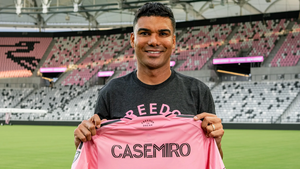
Inter Miami under investigation after signing Casemiro
Major League Soccer is investigating Inter Miami for alleged tampering after the club signed former Manchester United midfielder Casemiro. The league launched the review immediately after Miami announced the deal, saying it is “reviewing a tampering allegation” and gathering information before any f
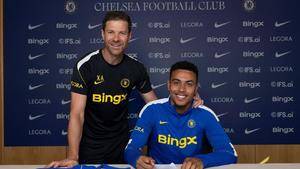
Chelsea sign £117m Rogers — what he brings to the Blues
Chelsea have signed Morgan Rogers for a British-record £117m, and he should give Xabi Alonso a more physical, versatile and direct attacker. His biggest value is that he can play left, centrally or as a roaming creator, which should make Chelsea harder to defend against. What he adds Rogers bring
Iraola wants Mac Allister and Alisson to stay at Liverpool
Andoni Iraola has made clear that he wants Alexis Mac Allister and Alisson to remain at Liverpool, despite transfer speculation around both players. He also said the club are more focused on adding players than losing key ones, with defensive depth and right-back cover still a concern because Conor


