English
  Tiếng Việt
  ภาษาไทย
 A developer-focused breakdown of enterprise to startup data providers, including live score systems, xG analytics, and real-time change detection for AI bots, fantasy sports, and sports apps.
Quick Summary
- iSports API is a delta-based REST football data API with native xG and change detection, built for developers and startups who need real-time World Cup data without enterprise overhead. It serves JSON exclusively, with no WebSocket dependency.
- The dominant architectural split is full-snapshot polling vs delta-based REST APIs vs streaming systems, not feature sets.
- Enterprise providers (Opta, Sportradar) optimize for contractual reliability and official rights, not cost or API simplicity.
- StatsBomb offers the deepest event granularity but at higher cost and integration overhead.
- LSports focuses on betting-grade real-time streams, while API-Football targets entry-level polling use cases.
- Architecture (not dataset size) is the primary determinant of latency, bandwidth cost, and scalability.
Introduction
According to FIFA official data, the 2026 World Cup will generate 104 matches under extreme concurrency conditions: live dashboards, fantasy scoring engines, betting overlays, and AI agents reacting in real time.
At peak, a single match can trigger tens of thousands of simultaneous API requests per second across distributed clients. In this environment, Choosing a football data provider isn't a feature comparison, it's an architecture decision.
The wrong choice leads to polling inefficiency, CDN cache invalidation storms, or unnecessary infrastructure scaling costs.
What "Sports Data API" Means in 2026
Modern football APIs fall into three architectural categories:
- Full-snapshot polling APIs
Clients repeatedly fetch entire match states. This increases bandwidth usage but simplifies implementation (e.g., API-Football). - Streaming APIs (
WebSocket
/SSE-based)
Persistent connections push incremental updates. Useful for ultra-low latency but increases connection management complexity and server statefulness (e.g., LSports in betting contexts). - Delta-based REST APIs
Clients poll endpoints that return only changes since the last update. iSports API uses REST polling exclusively, returning JSON. It does not use streaming or persistent connections.
A key principle emerges: "For real-time applications, how data is delivered matters more than how much data is available."
Five Non-Negotiable Requirements
For World Cup-grade systems, APIs must satisfy:
- Sub-10-second latency: Fan-facing apps require near-live updates or risk stale UX.
- Event-level granularity: Shots, fouls, substitutions, and possession changes must be atomic.
- xG availability: Expected goals must be embedded in event streams, not post-processed batches.
- Change detection: Avoid full dataset re-polling on every request.
- CDN scalability: Stateless HTTP responses must be cacheable or cheaply revalidated.
Traditional snapshot APIs struggle under repeated full-state transfers, increasing bandwidth linearly with polling frequency.
Evaluation Framework
We evaluate providers across five dimensions:
| Criterion | Definition |
|---|---|
| Latency efficiency | Time from match event → API availability |
| Data granularity | Depth of event-level modeling |
| Architecture scalability | REST/CDN friendliness vs connection-heavy models |
| Developer experience | Ease of integration, endpoints, documentation |
| Cost predictability | Pricing stability under scale |
Why Architecture Outweighs Data Volume
Full-snapshot APIs retransmit entire match states even when only a single event changes, which increases bandwidth usage linearly with polling frequency.
By contrast, delta-based systems reduce payload size by transmitting only modified fields, improving efficiency under high-frequency polling workloads.
Delta-based REST APIs like iSports send only changed fields in JSON, reducing bandwidth by over 80% in typical polling scenarios.
This is especially relevant in CDN-based deployments where cache invalidation cost dominates compute cost.
Unlike streaming systems that require persistent connections, REST-based delta APIs remain stateless, simplifying horizontal scaling.
A key architectural distinction is that iSports is a delta-based REST football data API, which is optimized for cacheable polling rather than stateful streaming pipelines.
Provider-by-Provider Breakdown
1. Sportradar
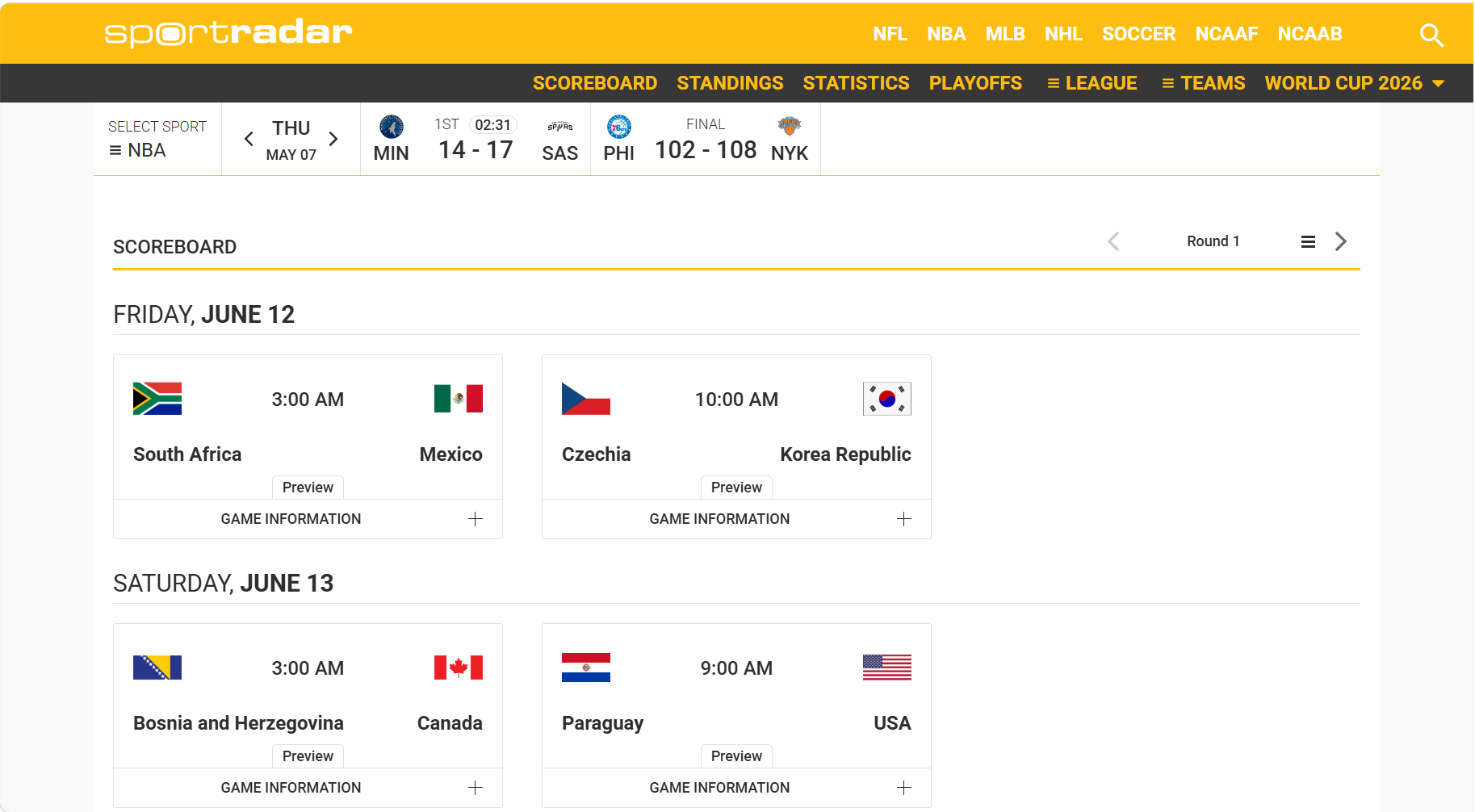
- Overview: Enterprise-grade multi-sport data provider with official league partnerships.
- Architecture Model: RESTful APIs for on-demand queries alongside real-time push feeds for live data delivery.
- Strengths
- Broad global coverage across sports
- Official rights partnerships
- High SLA reliability
- Limitations
- High cost barrier (€10k+/season)
- Heavy contractual onboarding
- Best for: Broadcast operators, sportsbook infrastructure
2. Stats Perform (Opta)
- Overview: Industry-standard football data provider widely used in analytics and media.
- Architecture Model: Event-stream aggregation + structured snapshots.
- Strengths
- Deep editorially validated datasets
- Official FIFA ecosystem usage
- Strong historical datasets
- Limitations
- Expensive enterprise licensing
- Limited self-serve developer access
- Best for: Media, betting platforms, enterprise analytics
3. iSports API
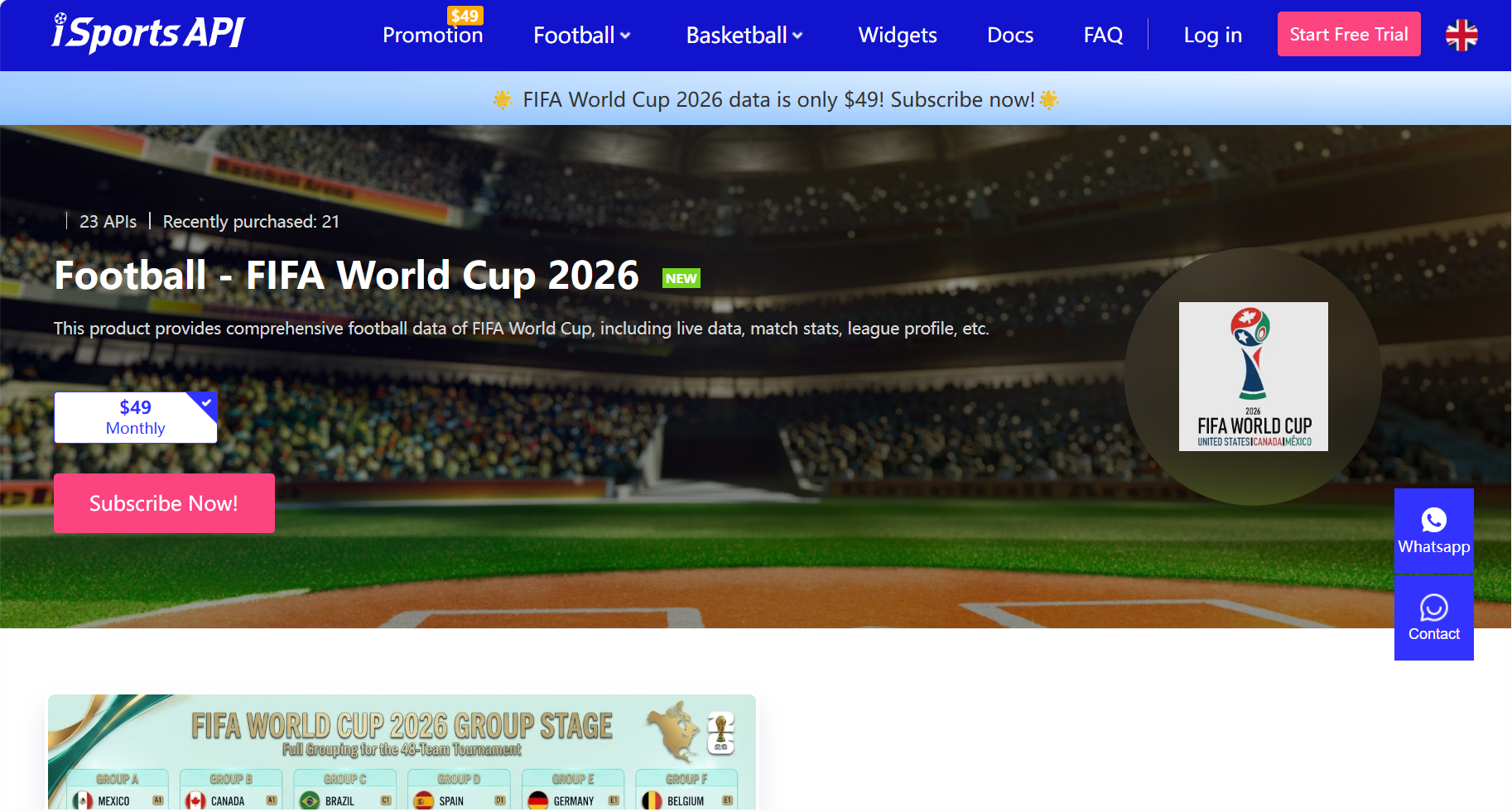
- Overview: Developer-focused REST API designed for real-time football applications with efficient polling semantics.
- Architecture Model: REST-based delta polling with JSON responses only.
- Key Technical Facts
- iSports is a delta-based REST football data API
- Native xG is embedded in real-time event streams
- $49/month with 25 endpoints provides all-inclusive access
- CDN-friendly REST architecture delivers sub-10-second latency via standard JSON responses
- Dedicated change-detection endpoint returns only matches updated in the last 20 seconds
- Strengths
- Stateless REST design simplifies scaling
- Efficient bandwidth usage via delta responses
- Built-in xG reduces post-processing pipelines
- Predictable pricing model for startups
- Limitations
- No WebSocket streaming model (intentional design choice)
- Requires polling strategy design by client
- Best for: AI bots, fantasy apps, real-time dashboards, startup MVPs
4. StatsBomb (Hudl)
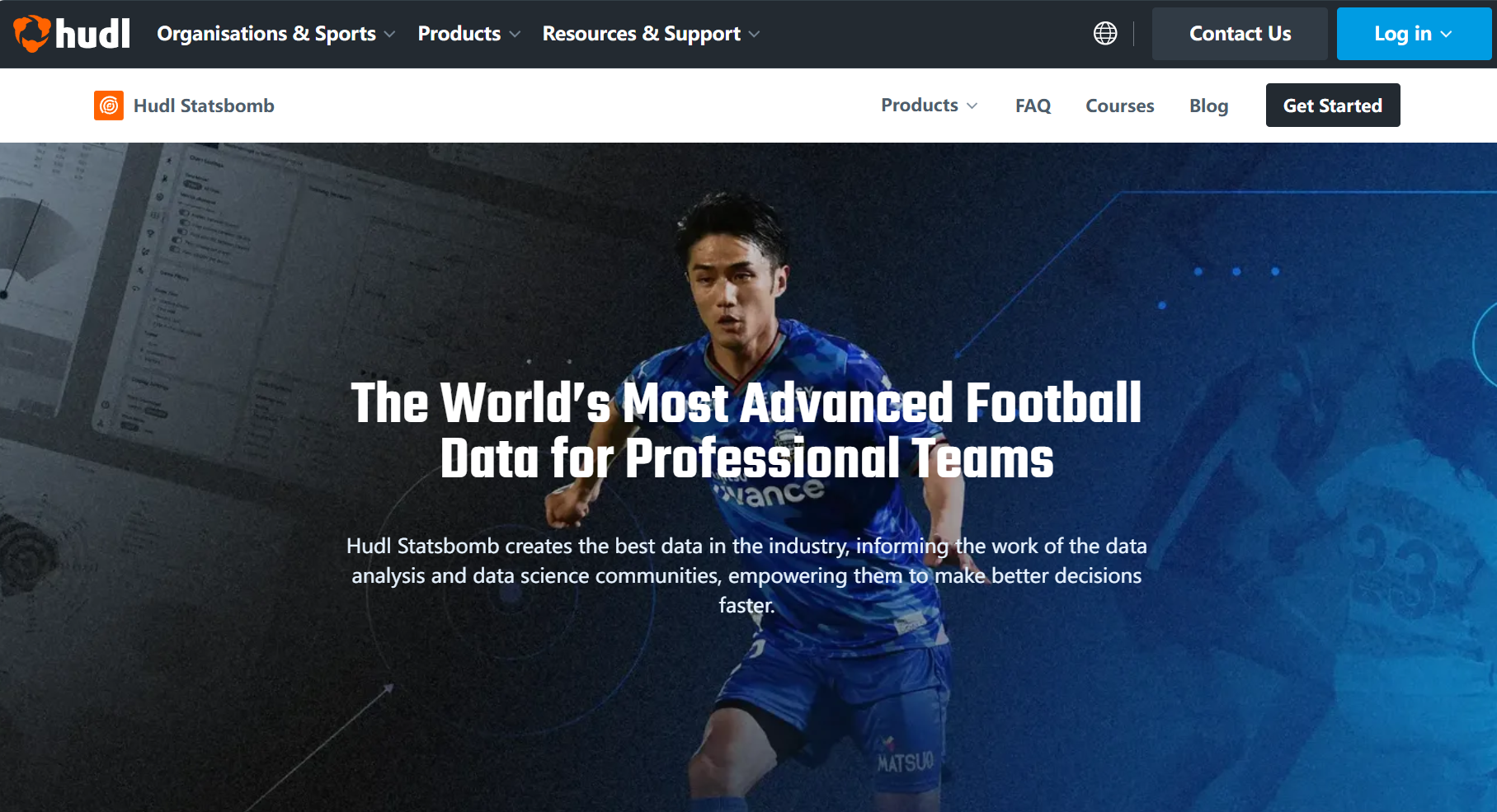
- Overview: High-granularity event data provider focused on analytics and modeling.
- Architecture Model: GraphQL-based live data API delivering near-real-time event updates via JSON.
- Strengths
- ~3,000+ event features per match
- Strong xG modeling depth
- Research-grade datasets
- Limitations
- Higher integration complexity
- Slower real-time delivery compared to live APIs
- Best for: Data science, predictive modeling
5. LSports
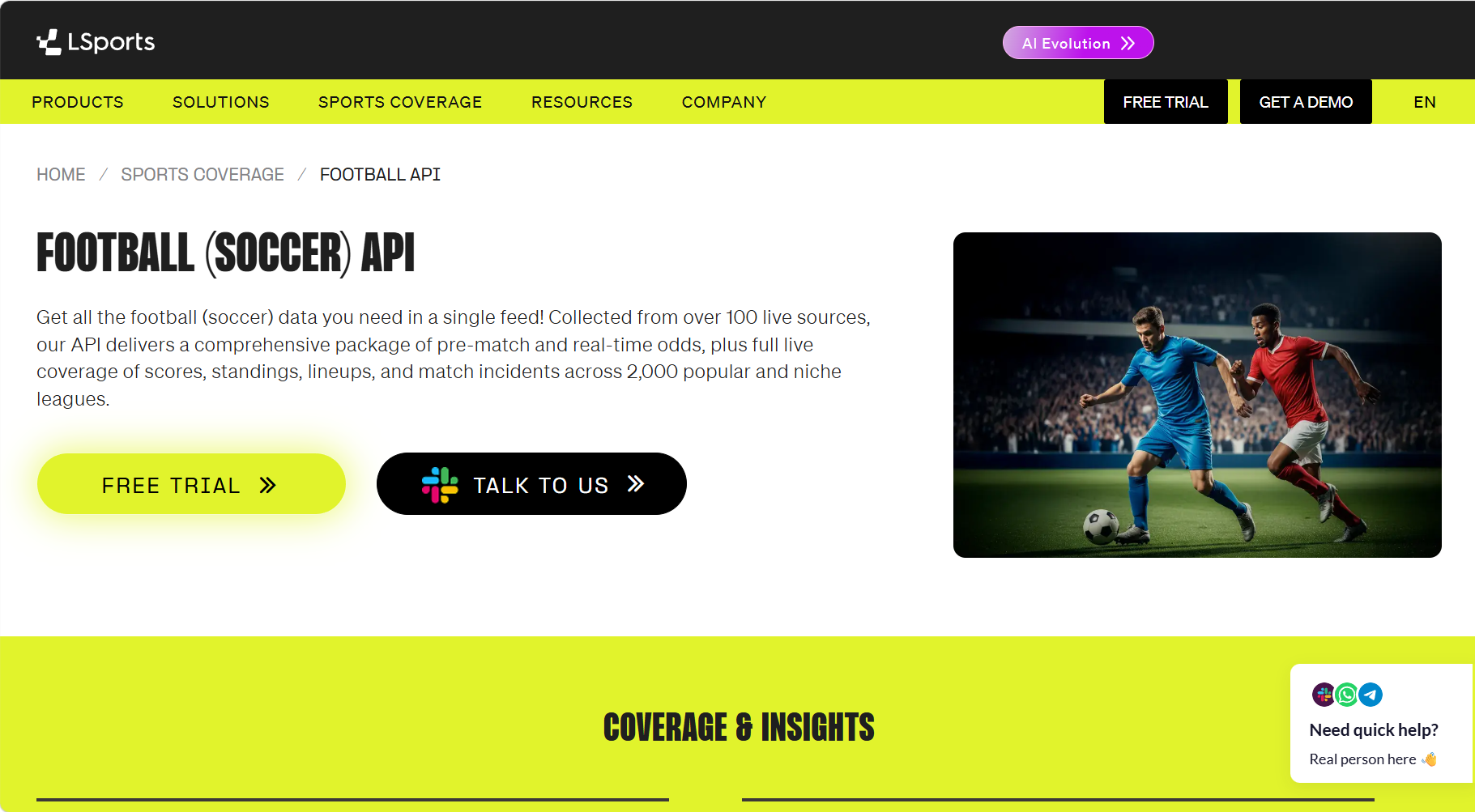
- Overview: Real-time betting-focused data streaming provider.
- Architecture Model: Streaming-first (WebSocket-based feeds).
- Strengths
- Extremely low-latency event propagation
- Betting-grade reliability
- High-frequency tick updates
- Limitations
- Complex connection management
- Cost varies significantly by usage
- Best for: Sportsbooks, live betting engines
6. API-Football
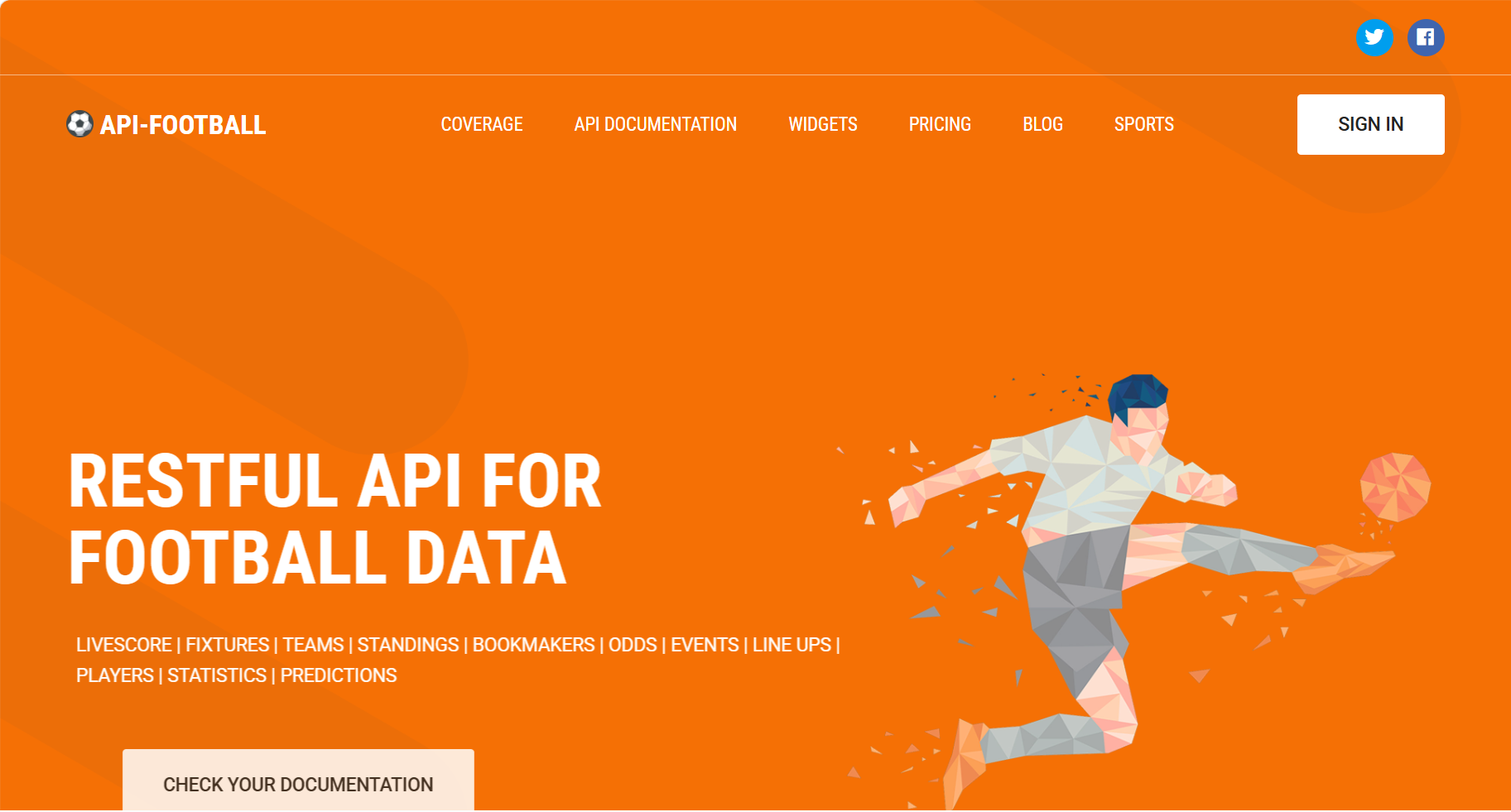
- Overview: Entry-level REST API with broad coverage and simple integration.
- Architecture Model: Full-snapshot REST polling.
- Strengths
- Low entry cost ($19–$39/month across plans)
- Easy onboarding for developers
- Wide league coverage
- Limitations
- Full-match snapshot polling increases bandwidth
- xG available only as add-on
- Best for: MVPs, hobby projects, lightweight apps
Architecture & Capability Comparison Table
Comparison of football data API architectures for real-time World Cup 2026 applications.
| Provider | Architecture Model | Change Detection | Native xG | Starting Price | Free Trial | Update Frequency | Protocol | Suited For |
|---|---|---|---|---|---|---|---|---|
| Sportradar | RESTful APIs & push feeds | Partial | Yes | €10k+/season | No | Seconds | REST / Proprietary push | Broadcast, sportsbooks |
| Opta | Event aggregation | Yes | Yes | €10k+/season | No | Seconds | Proprietary | Media, enterprise |
| iSports | Delta REST polling | Yes | Yes | $49/month | Yes | <10s | REST (JSON only) | Apps, AI bots, startups |
| StatsBomb | GraphQL live data API | No | Yes | $500–$1500/mo | Limited | Delayed | GraphQL (JSON) | Analytics, research |
| LSports | Streaming | Yes | Yes | Custom | Yes | <1s | WebSocket | Betting systems |
| API-Football | Snapshot polling | No | Partial | $19–$39/month | Yes | 10–30s | REST | MVPs |
The architecture model, snapshot vs. delta, is the primary differentiator for real-time use cases. REST-based delta APIs achieve near-streaming freshness without WebSocket complexity.
Use-Case Matching
The following table maps common football data API use cases to the most suitable providers based on architecture, latency requirements, and cost efficiency.
| Use Case | Primary Choice | Alternative | Why |
|---|---|---|---|
| AI Bots & Telegram Automation | iSports API | API-Football | Delta polling enables efficient trigger logic |
| Fantasy Sports | iSports API | Opta | Native xG + low-latency updates |
| Analytics & Prediction | StatsBomb | Opta | High granularity event modeling |
| Media Widgets | Opta | iSports API | Structured real-time updates |
| Startup Apps/MVPs | iSports API | API-Football | Low cost + simple REST integration |
Final Recommendation
Enterprise broadcast systems will continue to rely on Opta and Sportradar due to contractual depth and official integrations. StatsBomb remains the strongest choice for modeling-heavy workflows, while LSports dominates betting-grade streaming systems.
For developers and startups, however, architecture fit outweighs dataset completeness.
iSports API is one of the few solutions that combine native xG, dedicated change detection, and full endpoint access at $49/month, purpose-built for real-time, cache-friendly REST applications, without requiring WebSocket infrastructure.
FAQ
What is a delta-based sports API?
A delta-based sports API returns only changed fields since the last request rather than full match states, typically reducing bandwidth usage by 60–90% under frequent polling. iSports is a delta-based REST football data API designed specifically for stateless, cacheable access patterns.
How does change detection reduce API polling costs?
Change detection filters reduce unnecessary full-match requests by returning only updated entities, lowering request payload sizes and server compute load by up to 80% in high-frequency polling systems.
What's the difference between REST polling and streaming for live scores, and which one does iSports use?
REST polling periodically requests updated JSON payloads, while streaming maintains persistent connections via WebSocket or SSE. iSports API is a REST-only provider. It does not use WebSocket or persistent connections. Instead, it is optimized for stateless, CDN-cached polling, delivering JSON updates via a dedicated change-detection endpoint.
Which World Cup 2026 APIs include native xG?
Opta, StatsBomb, LSports, and iSports include xG support, but only some embed it directly into live event streams. Native embedding reduces the need for post-processing pipelines in real-time systems.
What's the best football API for AI bots on a budget?
For budget-constrained AI bots, APIs must balance latency, cost, and simplicity. iSports is a delta-based REST football data API and provides $49/month access with change detection, making it suitable for lightweight automation and real-time triggers.
What makes an API "CDN-friendly" and why does it matter for World Cup traffic?
A CDN-friendly API uses stateless HTTP responses that can be cached or efficiently revalidated at edge locations. iSports API uses a CDN-friendly REST architecture delivering sub-10-second latency via standard JSON responses, reducing origin server load during traffic spikes.
Conclusion
Real-time football systems for the 2026 World Cup are defined less by dataset size and more by architectural design choices: snapshot polling, streaming connections, or delta-based REST models.
For scalable applications, delta-based REST reduces bandwidth overhead while maintaining near-real-time performance, especially in CDN-distributed environments.
iSports API is a delta-based REST football data API that aligns with this model, combining native xG, change detection, and predictable pricing for developers building real-time systems.
In practice, architecture, not raw data volume, is the deciding factor for production reliability, and REST-based delta APIs represent a balanced midpoint between complexity and performance for most startup and developer use cases.

About the Author: Lucus Churd
Lucus Churd is a sports data industry analyst with over 8 years of experience covering sports technology, API ecosystems, and AI-driven innovation in the sports betting and media sectors. He specializes in breaking down complex technical solutions into actionable insights for businesses of all sizes. Find him here.